Investor Overview

The AI operating system for utility-scale solar.

The global PV industry installs over 400 GW annually, yet most of the lifecycle — design, construction oversight, operations — still runs on spreadsheets, manual inspections, and fragmented point solutions. xSkylight is changing that.

The problem we saw

We came from the field. We spent years designing PV plants, supervising construction, and optimising operations for utility-scale solar assets across Europe and beyond. And everywhere we looked, the same pattern repeated itself.

A design engineer in one office produces a CAD layout. A construction manager on site compares it against reality using a clipboard and a camera—deviations are spotted late, sometimes only at commissioning. Once the plant is handed over, an operations team monitors performance through a SCADA system that has no link to the original design model. When something degrades, a maintenance technician drives out, takes photos, writes a report by hand, and emails it to three different people. Each phase ends where the next begins—but nothing actually connects them.

Every stage of the PV lifecycle is disconnected from the next. Data is trapped in silos. Decisions are made without context. And the industry loses billions each year to design rework, construction delays, undetected faults, and suboptimal operations.

This is not a niche inefficiency. It is a structural gap across a $300+ billion annual market — and it grows wider with every gigawatt installed.

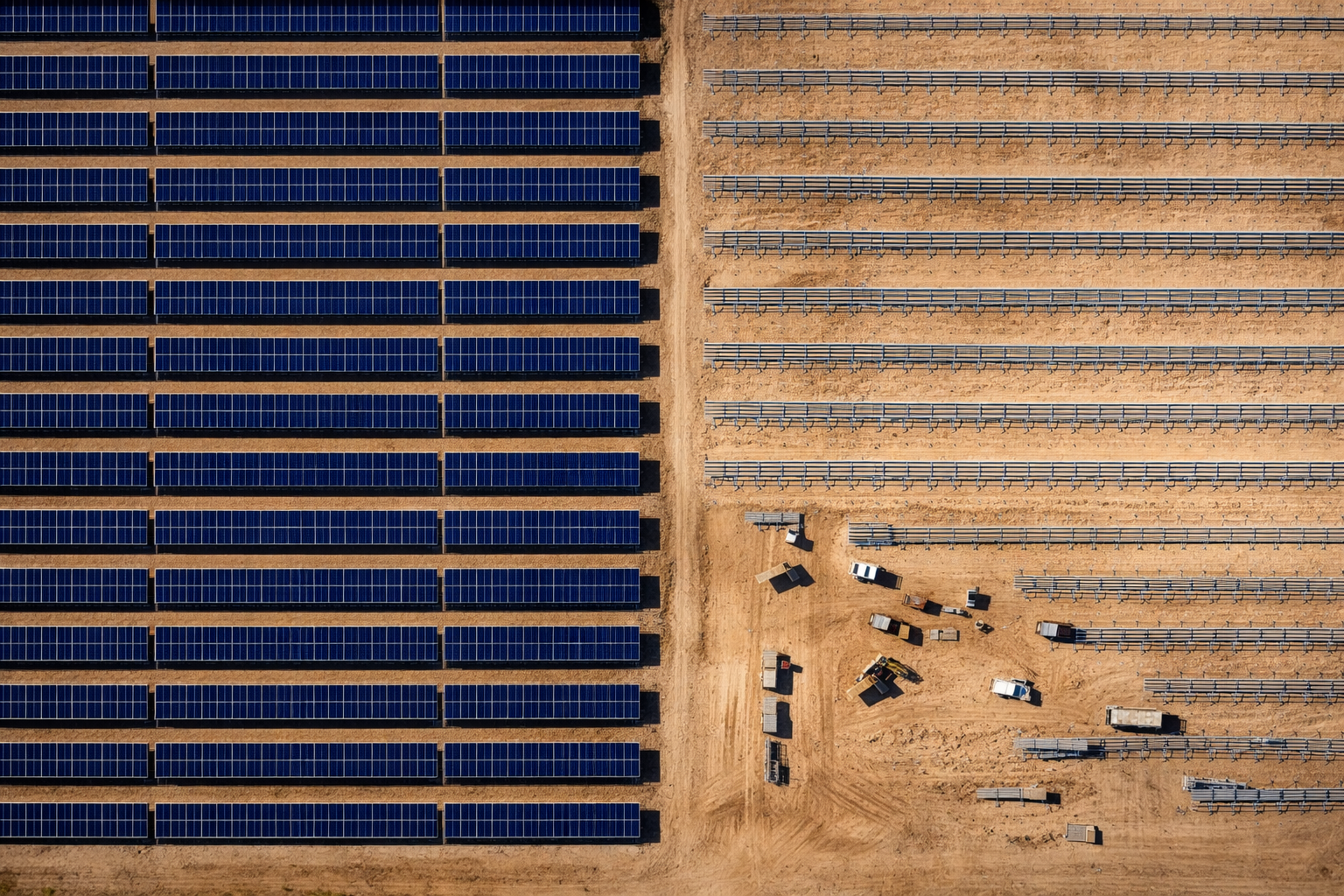
Aerial view of solar farm under construction showing completed and in-progress zones

The scale of the disconnect

  • Design phase: Layouts are produced in CAD tools that have no awareness of construction sequencing, procurement constraints, or operational performance. Design engineers iterate manually, often producing outputs that need rework once they reach the EPC contractor.
  • Construction phase: Progress is tracked through manual site walks and photo logs. There is no systematic way to compare what was designed against what is actually built. Deviations are caught late — sometimes only during commissioning.
  • Operations phase: SCADA systems collect telemetry, but they lack intelligence. Anomalies are detected by threshold alarms, not by models that understand what the plant should be doing. Maintenance is reactive. Fleet-level insights are virtually non-existent.
  • Documentation: Every project generates thousands of documents — permits, technical specifications, compliance records, inspection reports. Finding the right document at the right time is a challenge that costs projects weeks of delays.

We realised that the PV industry doesn't need another point solution. It needs a platform that connects design intent to construction reality to operational performance — with AI that understands the entire lifecycle.

What we are building

xSkylight is a modular AI platform that unifies the entire PV lifecycle into one system. Six modules, one data thread, every output auditable.

Our platform is not a collection of disconnected tools stitched together by APIs. It is built from the ground up as an integrated system where design data flows into construction verification, construction data feeds into operational baselines, and operational insights loop back into design optimisation.

The six modules

  • Design Automation — DXF-aware pipelines that produce layouts, routing, string plans, BOQ, and full documentation packages. Every output is validated against engineering rules and constraints. What used to take a team of engineers weeks, our system produces in hours — with full traceability.
  • Document Intelligence — Automated due diligence and document management. Our system extracts entities from unstructured documents, detects missing or expired records, and generates structured project context. Think of it as an AI analyst that has read every document in the project room.
  • Autonomous Site Supervision — Drone and ground-level capture feeds into AI models that produce orthomosaic maps, point clouds, and object-level progress reports. The system compares what is built against the design model and generates evidence packages automatically. No more subjective progress assessments.
  • AI SCADA + EMS — Unified telemetry ingestion, anomaly detection powered by physics-informed models, generation forecasting, and dispatch optimisation. For hybrid sites (PV + BESS + H₂), the EMS layer optimises across multiple asset types in real time.
  • O&M Analytics — Predictive maintenance that goes beyond simple threshold alarms. Our system diagnoses root causes, prioritises actions based on financial impact, and generates complete evidence packages for warranty claims and insurance.
  • Digital Twin — The connective tissue. A living model that links design intent to as-built reality to operational performance. Every component is traceable. Every change is versioned. Every decision has a data trail.
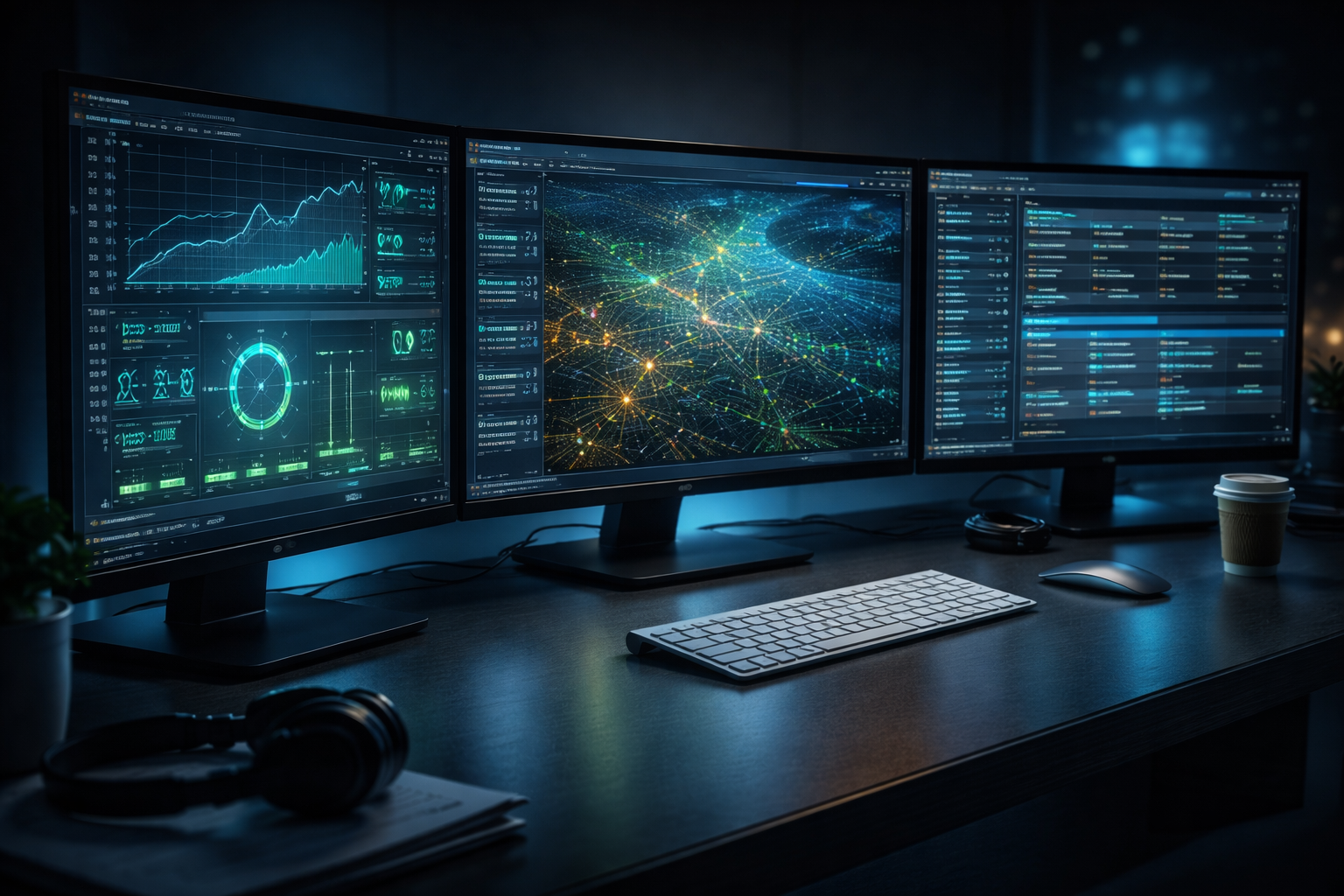
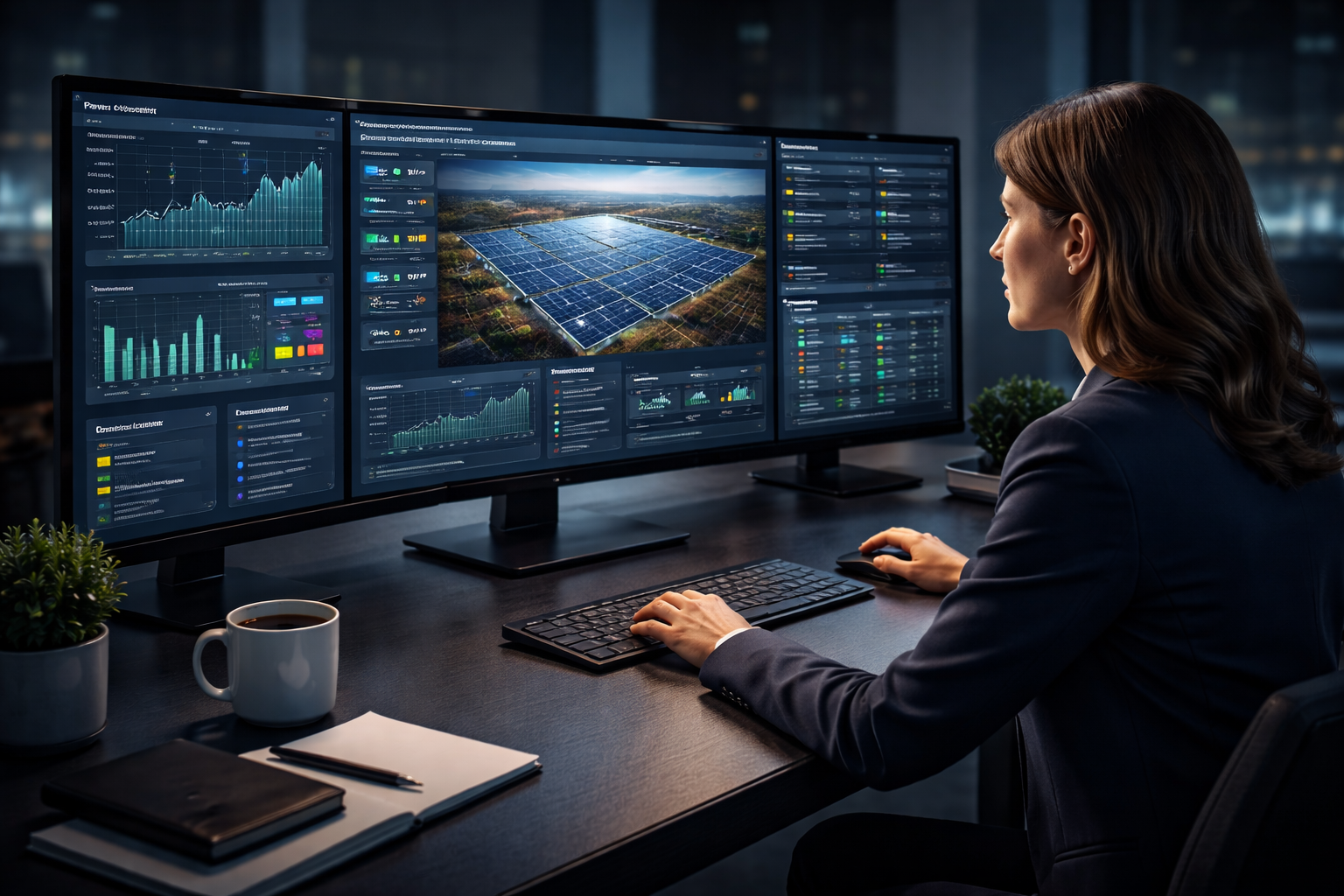
Modern control room with SCADA monitoring dashboards

Why integration matters

The value of our platform is not just in what each module does individually. It is in the connections between them. When the design automation module produces a layout, the autonomous inspection module knows exactly what to look for during construction. When the SCADA system detects an anomaly, it can trace it back to the design parameters and construction records. When the O&M system recommends maintenance, it references the digital twin to predict the impact on plant performance.

This is what we mean by "one AI platform for the entire PV lifecycle." It is not a marketing slogan. It is an architectural decision that creates compounding value at every stage.

The market opportunity

Solar PV is no longer an alternative energy source. It is the dominant form of new electricity generation globally. The numbers speak clearly:

593 GW
New solar installed in 2024
$300B+
Annual PV investment globally
5.5 TW
Cumulative capacity by 2030

Yet the software that manages these assets has not kept pace. The PV software market is fragmented across dozens of point solutions: one tool for design, another for monitoring, a third for maintenance, a fourth for document management. None of them talk to each other. None of them use AI in a meaningful way.

Our addressable market

The global market for PV lifecycle software — spanning design tools, SCADA/EMS, asset performance management, drone analytics, and document management — is estimated at $8–12 billion annually and growing at 18–22% per year. This is being driven by three converging forces:

  • Volume: The sheer scale of new installations means that manual processes simply cannot keep up. An EPC contractor managing 2 GW of construction cannot rely on site walks and spreadsheets.
  • Complexity: Hybrid sites (PV + BESS + hydrogen) require integrated monitoring and control. You cannot optimise dispatch across three asset types using separate systems.
  • Regulation: Grid codes, ESG reporting, and financial compliance increasingly require auditable, automated reporting. Paper trails are not enough.

xSkylight is positioned to capture this market not by competing with individual point solutions, but by replacing the entire fragmented stack with one integrated platform.

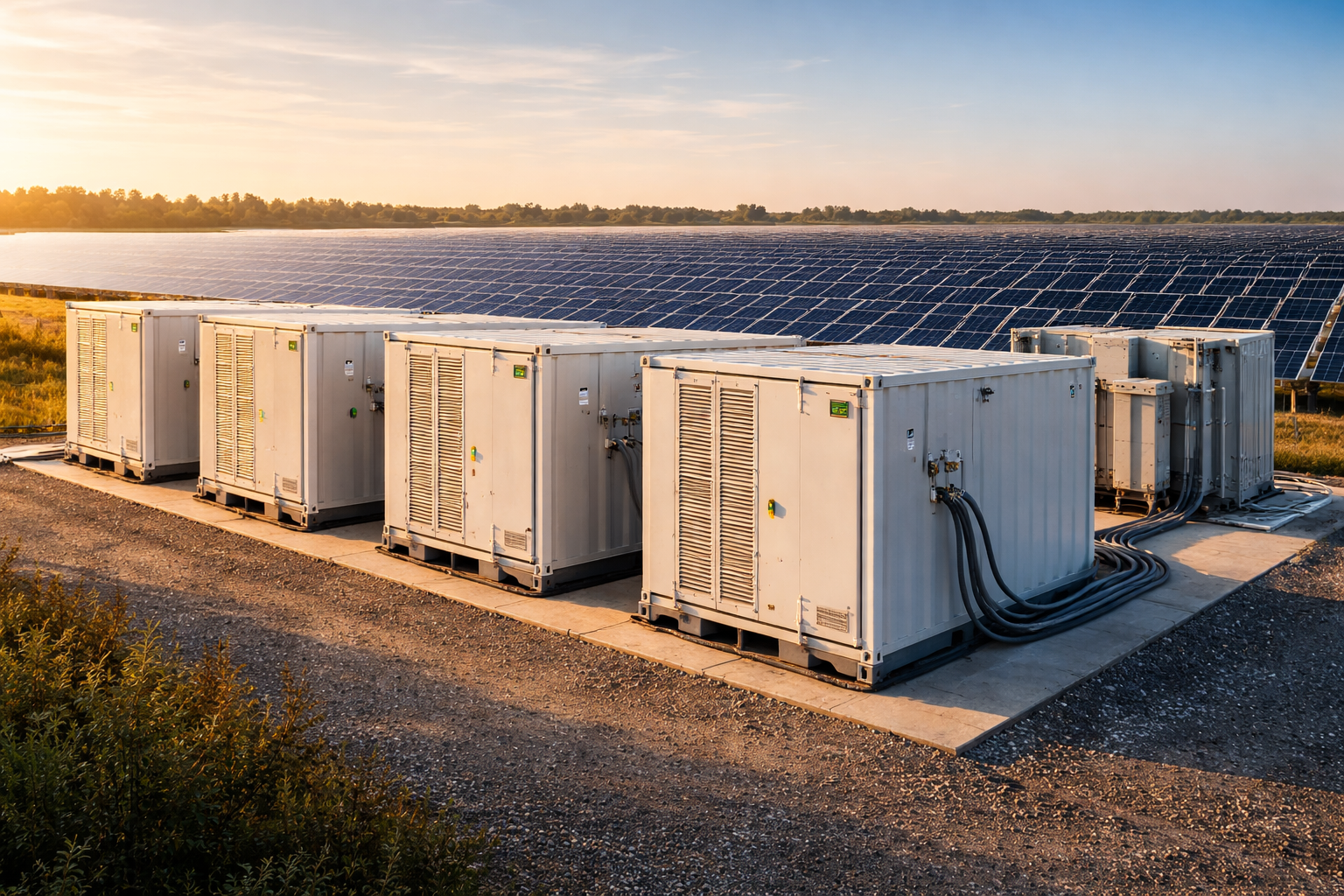
Battery energy storage system containers next to solar farm at sunset

The hybrid transition

The energy market is moving rapidly from pure PV to hybrid installations that combine solar, battery storage, and increasingly hydrogen production. This transition multiplies the complexity of asset management — and it multiplies the value of an integrated platform.

A hybrid site needs design tools that understand the interactions between PV arrays and battery systems. It needs an EMS that can optimise dispatch across generation, storage, and demand. It needs O&M analytics that can diagnose issues across multiple technology types. xSkylight is built for this complexity from day one.
Why now

Three technology shifts have converged to make this possible:

1. AI has matured for industrial applications

Computer vision models can now reliably detect defects in thermal images, track construction progress from drone imagery, and extract structured data from engineering documents. Large language models can process unstructured documentation and generate reports that meet engineering standards. These capabilities were experimental three years ago. Today they are production-ready.

2. Edge computing enables autonomous operations

Modern edge devices can run inference models on site, enabling real-time detection and control without depending on cloud connectivity. This is critical for remote PV installations where network reliability cannot be guaranteed. xSkylight uses a hybrid edge-cloud architecture that processes time-critical decisions locally and aggregates fleet-level intelligence in the cloud.

3. The industry is ready

For the first time, utility-scale PV developers and operators are actively seeking AI-powered solutions. The combination of growing portfolio sizes, increasing regulatory requirements, and pressure on margins has created genuine demand for automation. We are not creating a market — we are entering one that is actively pulling for our product.

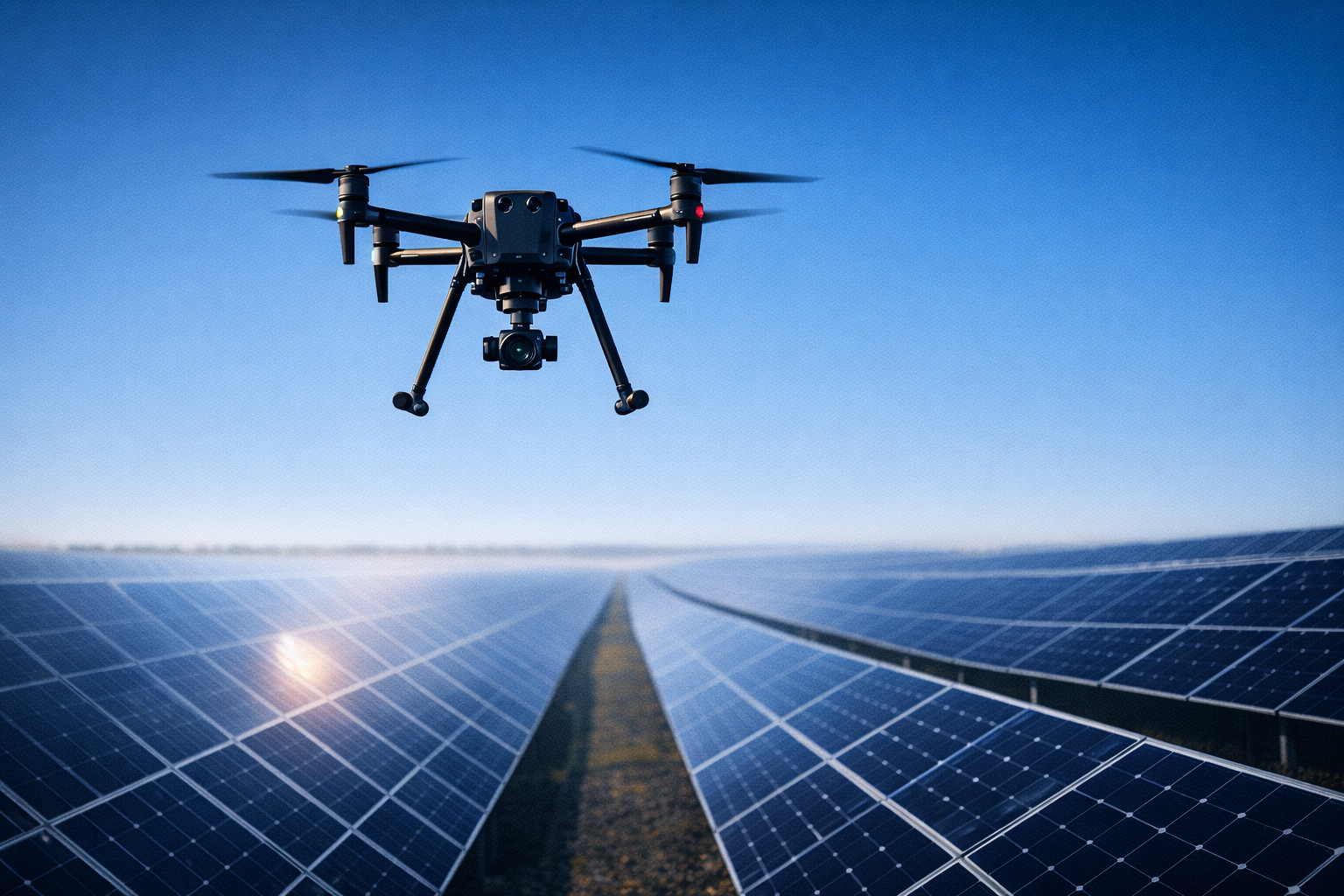
Professional drone hovering above solar panel rows during inspection

Our competitive advantage

The PV software landscape is crowded with point solutions, but there is no incumbent that offers what we are building. Our advantage comes from four sources:

The four moats

  • Full lifecycle integration — No competitor covers design, construction oversight, SCADA/EMS, and O&M in a single platform. Competitors either focus on one stage (design OR monitoring) or attempt integration through acquisitions that result in stitched-together products with different data models and UX patterns.
  • Domain-specific AI — Our models are trained on PV-specific data: DXF layouts, thermal drone imagery, SCADA telemetry patterns, construction photography. Generic AI tools cannot match the accuracy and reliability of models built for this domain.
  • Auditability by design — Every output our platform produces is traceable to its inputs and the models that generated it. In an industry where decisions affect multi-million-pound assets and must withstand regulatory scrutiny, this is not a feature — it is a requirement.
  • Compounding data advantage — Each project that runs through our platform improves our models. Design patterns, construction defect signatures, performance degradation profiles — all feed back into the system. As our customer base grows, our AI gets better, which attracts more customers. This is a classic data flywheel.

What we are not

We are not a consulting firm that builds custom solutions for each client. We are not an AI research lab looking for a problem to solve. We are a product company with deep domain expertise, building software that we ourselves would have wanted when we were designing and operating PV assets.

Traction and roadmap

xSkylight is at the intersection of deep technical development and early commercial engagement:

500+ MW
Design pipeline automated
6
Platform modules in development
2026
First commercial deployments

Where we are today

  • Core AI models for design automation, document intelligence, and autonomous inspection are functional and in testing
  • SCADA/EMS telemetry ingestion and anomaly detection pipeline architecture is complete
  • Active conversations with utility-scale developers, EPC contractors, and asset managers across Europe
  • Platform architecture designed for multi-tenant SaaS deployment with enterprise security

The next 18 months

  • Q2 2026: Pilot deployments with design automation and document intelligence modules
  • Q3 2026: Autonomous site supervision module enters field trials
  • Q4 2026: AI SCADA + EMS module enters beta with early adopters
  • Q1 2027: Full platform available for commercial deployment
  • 2027: Expansion into hybrid asset management (PV + BESS + H₂)
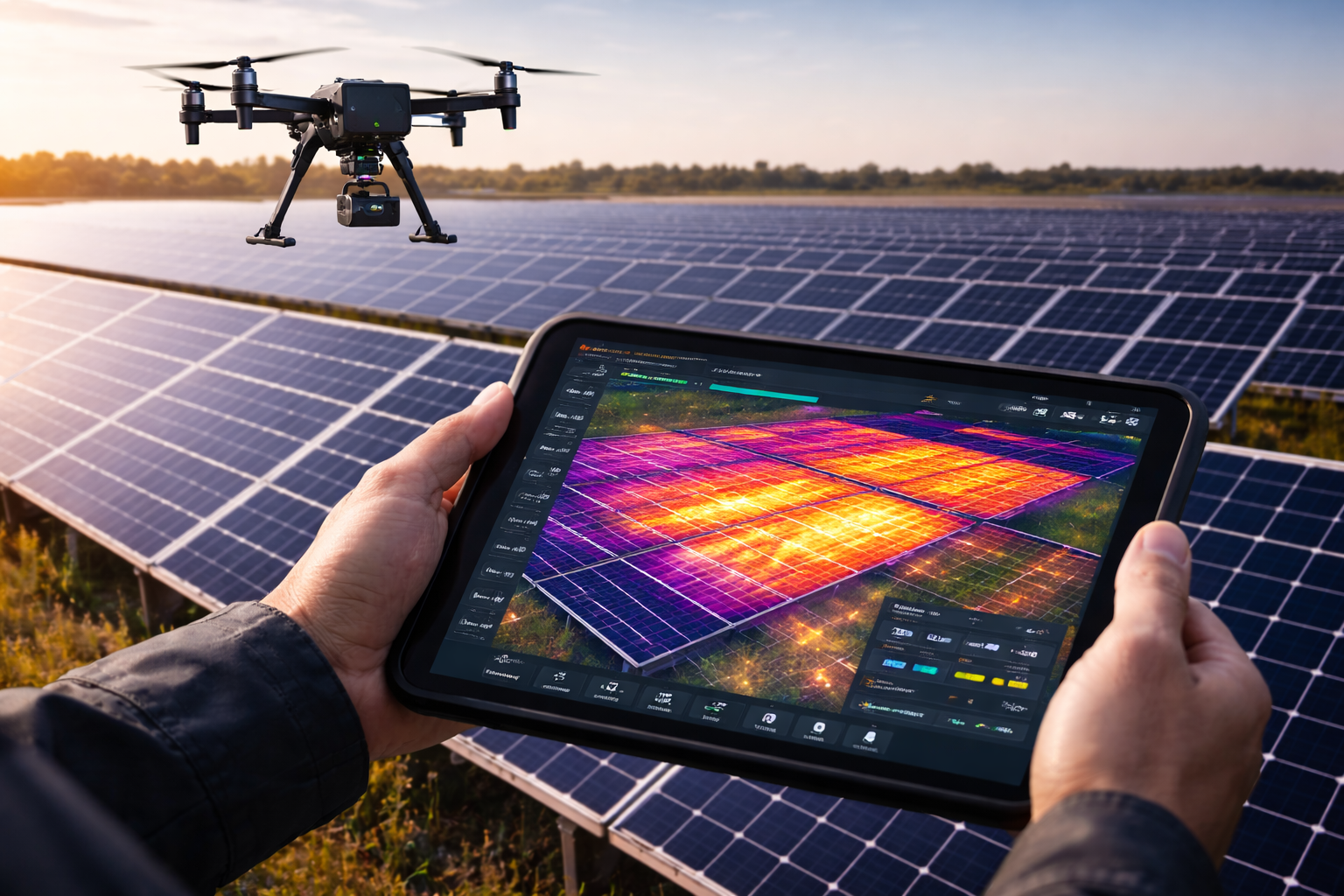
Thermal infrared image of solar panels showing hotspot detection

The team

xSkylight was founded by engineers who have spent their careers in the PV industry. We are not outsiders applying generic technology to energy. We are insiders who understand the workflows, the pain points, and the regulatory landscape from first-hand experience.

Our founding team combines expertise across PV system design, construction management, SCADA engineering, computer vision, machine learning, and enterprise software architecture. We have designed PV plants, supervised construction on site, debugged SCADA systems at 3 AM, and written the maintenance procedures that technicians follow in the field.

This domain depth is our unfair advantage. We build software that solves real problems because we have lived those problems ourselves.

Modern startup office in London with city skyline at dusk

Our engineering culture

We believe that software for regulated infrastructure must meet a higher standard. Our code is tested, our models are validated, our outputs are traceable. We do not ship features that we would not trust with our own assets. This is not a cultural aspiration — it is how we work every day.

We are headquartered in London, where we benefit from access to the UK's deep talent pool in AI, renewable energy, and financial technology — and proximity to Europe's largest concentration of energy investment firms.

The investment thesis

xSkylight represents an opportunity to invest in the operating system for the world's fastest-growing energy infrastructure.

Why invest in xSkylight

  • Massive addressable market — $8–12B annual TAM in PV lifecycle software, growing 18–22% annually, driven by record installation volumes and the hybrid energy transition.
  • No incumbent competitor — The market is fragmented across point solutions. There is no dominant platform that covers the full lifecycle. xSkylight is building that platform.
  • Deep domain moat — Our team's PV industry experience, combined with domain-specific AI models and an integrated data architecture, creates a competitive advantage that is difficult to replicate.
  • SaaS business model — Recurring revenue from platform subscriptions, with expansion revenue as customers adopt additional modules. High switching costs once the platform is embedded in workflows.
  • Data flywheel — Each deployment improves our models, which improves our product, which attracts more customers. This compounding advantage accelerates over time.
  • Timing — The convergence of industrial AI maturity, edge computing, and genuine market pull creates a window of opportunity that will not stay open indefinitely. The platform that captures this market in the next 2–3 years will define the category.

Use of funds

We are raising capital to accelerate platform development, fund pilot deployments, and build our go-to-market team. Specifically:

  • 60% Engineering: Complete and harden all six platform modules, including edge inference capabilities and hybrid asset support.
  • 20% Commercial: Fund pilot programmes with strategic early adopters, build sales engineering capability, and establish partnerships with drone operators and SCADA integrators.
  • 15% Operations: Scale the London team with senior hires in AI/ML engineering, PV domain expertise, and product management.
  • 5% Legal & compliance: IP protection, data security certifications (ISO 27001), and regulatory alignment across target markets.

Our ask

We are looking for investors who understand infrastructure technology, have patience for enterprise sales cycles, and recognise that the energy transition needs better software — not just more hardware. If you invest in deep-tech companies that solve real industrial problems, we should talk.

Join us in building the future of solar.

We are not just building software. We are building the infrastructure that will power the energy transition. If that resonates, reach out.